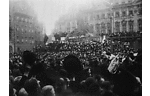
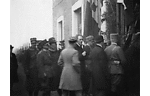
The film is part of the election campaign for The Norwegian Labour Party in 1930 and argues against the militarism of the Conservative Party. Scenes from World War I illustrates the horrors of the war...
In January 1916 there was a great fire in Bergen, where almost 400 buildings burned down and 2700 people lost their homes. The film shows the clean-up of the ruins.
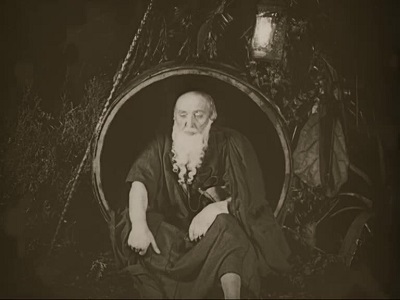
A commercial for Rex Margarine with the Greek philosopher Diogenes as the main character.
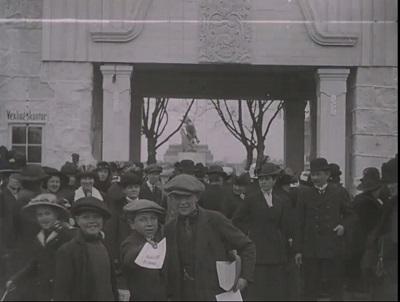
Various clips from Oslo 1912-14. The opening of the 100th Anniversary Exhibition, May 15, 1914, with people waiting to get in. Market stalls and trade in Oslo city centre. The departure of one of The ...
Newsreel showing the breakdown of the relation between USA and Germany in 1917, in addition to pictures from the American Navy, female train conductors and polar bears in a Paris zoo.
Newsreel in three parts: a football match with female players, the autumn fashion from Paris, and the favourite sport of cowboys, which seems to be gymnastics.
Commercial for Freia chocolates.
The film shows the visit of King Haakon 7th to the city of Sandefjord in 1916.
Američtí vojáci vyslaní do Francie na pomoc Spojencům pochodují s americkými vlajkami pařížskými ulicemi.
Mobilizace v Německu. Němečtí vojáci mávají z oken vlaku před odjezdem na frontu.
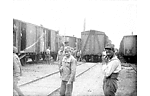
Českoslovenští legionáři na malém nádraží na Sibiři.
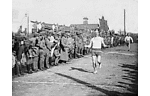
Ve chvílích odpočinku se legionáři v Rusku věnovali různým druhům sportu. Zde závody v běhu.
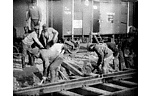
Technické oddíly udržovaly v dobrém stavu železniční tratě. Podbíjení kolejí.
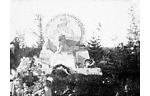
Pomník s českým lvem - symbolem české státnosti - na hrobě padlých legionářů ze sibiřské sochařské dílny.
Celek Staroměstského náměstí 21. prosince 1918. Vítání prezidenta Masaryka po jeho příjezdu do vlasti. Na pomníku mistra Jana Husa visí transparent s nápisem Husův Lid.
Během cesty do Prahy se Tomáš Garrigue Masaryk v Batavii setkal s italským králem Viktorem Emanuelem III.
O. Verf.. „Ein Kinematographengesetz in Württemberg.“ Bild & Film. Zeitschrift für Lichtbilderei und Kinematographie, III, 3/4 (1913/1914): 73. Jeder Film, der öffentlich vorgeführt werde, mü...
O. Verf.. „Kino und Kirche.“ Bild & Film. Zeitschrift für Lichtbilderei und Kinematographie III, 3/4 (1913/1914): 73-74. Beschlüsse der Fuldaer Bischofskonferenz von 20.8.1913. Schulpflichtigen ...
Felix, F.. „Die Kinematographie der Töne.“ Bild & Film. Zeitschrift für Lichtbilderei und Kinematographie III, 3/4 (1913/1914): 78-79. Meldung über erste Versuche, Film-und Tonaufnahmen zu sync...
W.R.. „Historische Filme.“ Bild & Film. Zeitschrift für Lichtbilderei und Kinematographie III, 3/4 (1913/1914): 86. Der Rezensent führt den Film als Beispiel dafür an, dass die Filmindustrie mi...
Hellwig, Albert. „Die Plakatzensur in Preussen.“ Bild & Film. Zeitschrift für Lichtbilderei und Kinematographie III,5 (1913/1914): 104-106. Rekapitulierung der Rechtslage zu Filmplakaten.
O. Verf.. „Preußischer Ministerialerlaß über das Plakat- und Reklamewesen.“ Bild & Film. Zeitschrift für Lichtbilderei und Kinematographie III, 5 (1913/1914): 111-112. Filmplakate bedürfen de...
Warstat, W.. „Kino und Schule. Von Prof. Dr. A. Sellmann.“ Bild & Film. Zeitschrift für Lichtbilderei und Kinematographie III,5 (1913/1914): 116-117. Der Rezensent sieht die Verwendung von Filmen...
Fritze, G.A.. „Die Kinematographie im Dienste der Industrie.“ Bild & Film. Zeitschrift für Lichtbilderei und Kinematographie III,6 (1913/1914): 124-128. Erörterung der bereits erfolgten Verwendu...