The film is part of the election campaign for The Norwegian Labour Party in 1930 and argues against the militarism of the Conservative Party. Scenes from World War I illustrates the horrors of the war...
In January 1916 there was a great fire in Bergen, where almost 400 buildings burned down and 2700 people lost their homes. The film shows the clean-up of the ruins.
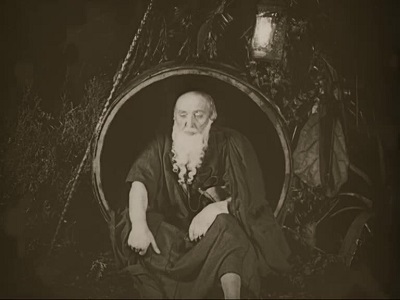
A commercial for Rex Margarine with the Greek philosopher Diogenes as the main character.
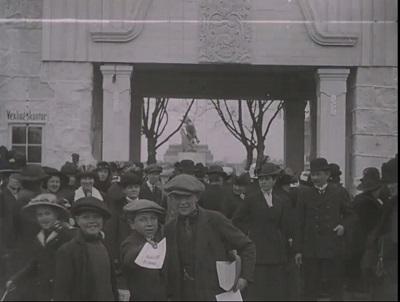
Various clips from Oslo 1912-14. The opening of the 100th Anniversary Exhibition, May 15, 1914, with people waiting to get in. Market stalls and trade in Oslo city centre. The departure of one of The ...
Newsreel showing the breakdown of the relation between USA and Germany in 1917, in addition to pictures from the American Navy, female train conductors and polar bears in a Paris zoo.
Newsreel in three parts: a football match with female players, the autumn fashion from Paris, and the favourite sport of cowboys, which seems to be gymnastics.
Commercial for Freia chocolates.
The film shows the visit of King Haakon 7th to the city of Sandefjord in 1916.
Zranění vojáci jedí v nemocničním.
Vojenský lékař ukazuje delegaci Červeného kříže zraněného vojáka.
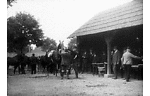
Rekvírování koní.
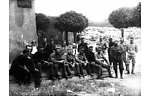
Odvedenci ve shromažďovacím táboře.
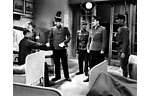
Celek nemocničního pokoje, v němž stojí nadporučík Schranel (Vladimír Pospíšil-Born) a podává ruku nadporučíku Liškovi (František Kreuzmann), sedícímu na posteli v rakouské uniform...
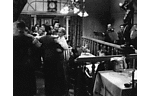
Pohled do taneční kavárny, kde nalevo tančí několik párů, včetně nadporučíka Schranela (Vladimír Pospíšil-Born) a zdravotní sestry Mathilde (Adina Mandlová). Napravo od nich je stolek...
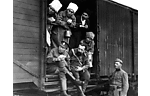
Pohled na exteriér vlaku, v jehož otevřených dveřích sedí či stojí šest ruských vojáků (vojenských zajatců) s asiatskými rysy. Vojáci drží v rukou chléb a všichni hledí směrem d...
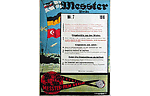
Frankemölle, Wenzel. "In diesem Zeichen wirst du siegen." Bild & Film. Zeitschrift für Lichtbilderei und Kinematographie III,2 (1913/1914): 45-45. Frankemölle lobt den Historienfilm "In hoc signo v...
Spectator. "Der heutige Stand der Kinoreform." Bild & Film. Zeitschrift für Lichtbilderei und Kinematographie III, 3/4 (1913/ 1914): 49-56. Der Autor warnt vor den Gefahren, die vom Kino ausgingen un...
Häfker, Hermann. "Sind die 'kleinen' Kinotheater der Reform schädlich?" Bild & Film. Zeitschrift für Lichtbilderei und Kinematographie III, 3/4 (1913/1914): 58-60. Häfker geht davon aus, dass die ...
Schumacher, Carl. "Zur 'Kinodramatik'." Bild & Film. Zeitschrift für Lichtbilderei und Kinematographie III, 3/4 (1913/1914): 63-64. Schumacher stellt die Abwesenheit von Dialogen als das Hauptproblem...
O. Verf.. "Kino-Kritik." Bild & Film. Zeitschrift für Lichtbilderei und Kinematographie III, 3/4 (1913/1914): 68-69. Obwohl immer wieder Forderungen nach der Hebung des Niveaus im Kino laut würden, ...
O. Verf.. "Das Kinoplakat." Bild & Film. Zeitschrift für Lichtbilderei und Kinematographie III, 3/4 (1913/1914): 70. Meldung über die zunehmende Hebung des Niveaus von Kinoplakaten. Statt auf grelle...
O. Verf.. "Die Kinematographie auf dem 85. Naturforschertag in Wien." Bild & Film. Zeitschrift für Lichtbilderei und Kinematographie III, 3/4 (1913/1914): 70-71. Meldung über den Einsatz von Filmen ...
O. Verf.. „Polizeiverordnung für das Rheinland.“ Bild & Film. Zeitschrift für Lichtbilderei und Kinematographie III, 3/4 (1913/1914): 72-73. Meldung über den Einsatz von Filmen als illustrieren...