(Reel 1) King George V and General Sir Herbert Plumer, commanding Second Army to which the two divisions were attached, are greeted by 30th (Old Hickory) Division commander, Major-General Edward M Lew...
The film is partially completed, and shows some signs of proper editing, but scenes may break off abruptly in one reel and resume in another reel. Throughout the film numerous reporters, press photogr...
The footage, filmed on May 30, 1915, records a WWI intercession procession before the Inner City Parish Church, the Basilica, and the Parliament. The creators of the film concentrated on the famous pe...
The daughter of the farmer András Balogh, Juli, is confused by the sight of a circus, she leaves her native village secretly and enters into an engagement with the dance master at a night club in the...
(Reel 1) The film opens with unrelated scenes of the Western Front, mainly the Marne and Château-Thierry areas. Then Theodore Roosevelt beside the grave of his son Quentin. Behind-the-lines scenes of...
The film emphasises the pre-war uniqueness of Britain, rich, insular, with a strong trading position and a free democracy united under the constitutional monarchy. The only pre-war violence comes in t...
(Reel 1) Training the New Army - "cheery non-slackers" undergo PT, drill and bayonet practice, mounting and sabre drill for cavalry. (Reel 2) Manufacture of a 15-inch naval gun and firing trials. (Ree...
The wife of Lőrinc Gáthy (Mr. Wickfield in the Croatian version) dies in childbirth. A female relative offers to take care of the motherless child and the household, but Gáthy declines the offer be...
Gustav Fröhlich, Lars Hanson (from left to right)
Dita Parlo, Gustav Fröhlich
Gustav Fröhlich
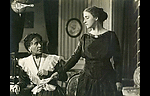
Paul Hartmann, Henny Porten
Olga Engl, Henny Porten (from left to right)
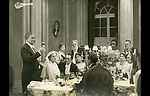
Adolf Klein (on the left), Henny Porten, Theodor Loos, Olga Engl (sitting, from left to right)
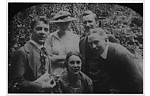
Erich Ponto (on the left), Hedda Lembach, Alice Verden, Wolfgang Filzinger (front, on the right)
Alice Verden
Dr. Sylva Luxor, "Neue Angriffe des „Vorwärts“ gegen das Kino", Der Kinematograph, 406, (1914), S. 8-9. Entgegnungen auf die Vorwürfe der Sozialdemokraten, die Kriegslage zur eigenen Bereicherun...
Edgar Költsch, Die Vorteile durch den Krieg für das Kinotheater, Der Kinematograph, 407, (1914), S. 11-12. Auch wenn es nicht so aussehe, habe das Kino durch den Krieg einen Aufschwung erlebt. Insbe...
Aus der Praxis, Der Kinematograph, 407, (1914), S. 18-22. Das Filmen auf dem Kriegsschauplatz sei nur noch mit Genehmigung des Generaltstabs erlaubt. Kommentierung vom Kriegsaufnahmen in Kinos durch ...
Horst Emscher, Der Film im Dienste der Politik, Der Kinematograph, 410, (1914), S. 15-16. Der Autor hebt hervor, dass die Kriegsführung auf publizistischer Ebene, mit der die Meinung des Auslands bee...
Kriegsecho in der Kinomusik, Der Kinematograph, 411, (1914), S. 18-19. Bericht über die musikalische Untermalung von Kriegsaufnahmen durch die Kinoorchester, die oft als störend empfunden würden.
Neuheiten auf dem Berliner Filmmarkte, Der Kinematograph, 413, (1914), S. 18-20. "Deutsche Helden" wird als Film mit ergreifender Handlung und gut nachgestellten Kampfszenen bezeichnet, der seiner Wir...
Berthold Baer, Wie lange noch ?, Der Kinematograph, 415, (1914), S. 21-22 Klage über einseitig deutschenfeindliche Kriegsberichterstattung in amerikanischen Kinos. Forderung nach deutschen Aufnahmen,...
Neuheiten auf dem Berliner Filmmarkte, Der Kinematograph, 416, (1914), S. 19-20. Rezension der Kinoneuerscheinungen. Die Zahl der rezensierten Unterhaltungsfilme (in denen Soldaten zwar dargestellt we...