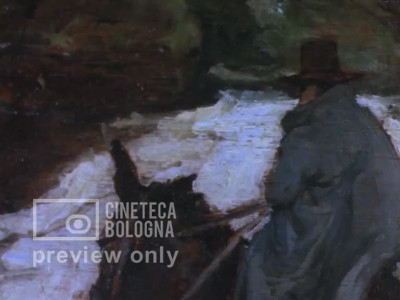
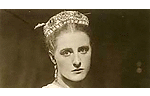
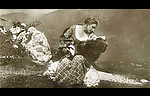
Livorno was just a lively center of Macchiaioli art as Florence. Many artists painted in Livorno including Cristiano Banti, Giovanni Boldini and, on the most painted waterfront in Italy, Vincenz...
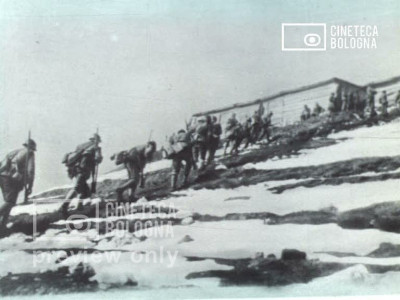
Il film, utilizzando materiali iconografici di repertorio, riprese sui luoghi reali e ricostruzioni narrative in assenza di personaggi, rievoca gli episodi più significativi della seconda guerr...
The work and the life of the writer Giovanni Boine.
Some moments of Umberto Saba’s poetry.
Si ricostruisce la vita di Giuseppe Melchiorre Sarto (1835-1914), nominato papa nel 1903, attraverso fotografie e immagini dei luoghi in cui visse. La prima parte è dedicata a Riese, in provinc...
The documentary reconstructs World War I through the letters of fighting soldiers. Both the situations in Italy and in other warring nations are taken into consideration.
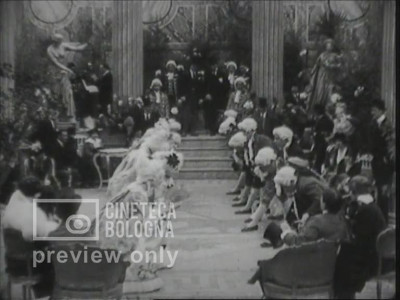
Until today one of the most mysterious figures in Italian cinema has been, without a doubt, Lucio D’Ambra. Recent finds of his works permit a more accurate outline of a personality capable of ...
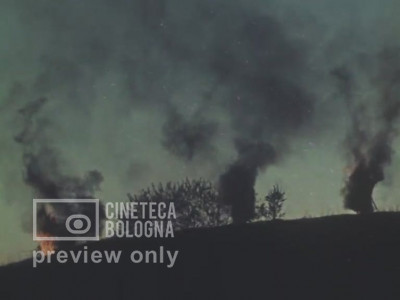
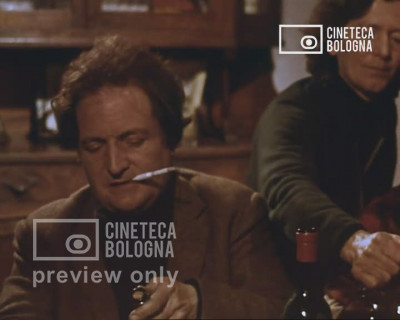
An evening at winter’s end: in Veneto, in the countryside of Treviso (in Zero Branco) the farmers have prepared bonfires for the feast of bread and wine, a propitiatory rite for a good year. T...
Szene aus "Das Geheimnis des Ingenieurs Branting"
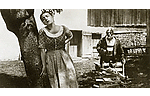
Henny Porten, Lupu Pick
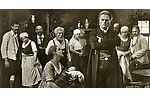
Szene mit Henny Porten, Eduard von Winterstein (vorne), Lupu Pick (hinten, 4.v.l.)
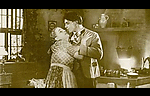
Henny Porten, Paul Hartmann
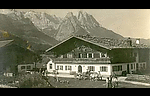
Szene aus "Die Claudi vom Geiserhof"
Henny Porten
Henny Porten
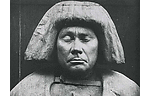
Paul Wegener in "Der Golem, wie er in die Welt kam" (1920)
Die grosse Wette. Ein phantastisches Erlebnis aus dem Jahre 2000, Der Kinematograph, 476, (1916), S. 17.
Der Lustspielfilm, Der Kinematograph, 490, (1916), S. 17-18. Bericht über die große Zahl an Komödien, die in den letzten Monaten erschienen seien.
Lt. Ludwig Brauner, Das Kinogeschäft nach dem Kriege, Der Kinematograph, 505, (1916), S. 15-16. Prognose über das Kino nach dem Krieg. Das Krieg habe dem Kino zu einer breiten Anerkennung verholfen,...
P. Max Grempe, Deutsche und feindliche Kinopolitik im Weltkriege, Der Kinematograph, 515, (1916), S. 17-19. Erötertung der verkehrten Politik Deutschlands in Bezug auf das Kino. Die hohen Lustbarkeit...
Walter Thielemann, Der Vaterländische Hilfsdienst und die Kinobranche, Der Kinematograph, 521/2 , (1916). Befürchtung, der Vaterländische Hilfsdienst könne die Kinobranche schwächen. Diese sei ab...
"'Um das grosse Erbe'. Aufhebung eines Filmverbots", Der Kinematograph, 549, (1917), S. 11-14.
Neuheiten auf dem Berliner Filmmarkte, Der Kinematograph, 550, (1917), S. 15-17. Rezension aktueller Filme. Interessant ist, dass die russische Gesellschaft filmisch thematisiert wird. Karl Schneider,...
Saturn Film AG, Rasputin. Drama in 5 Akten, Der Kinematograph, 553, (1917), S. 24.