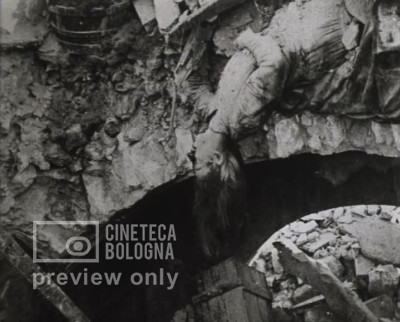
The emergency reconstruction after the 1915 earthquake is still the core of many villages of the Marsica area (in Abruzzo). This documentary is about the villages hit by the earthquake in their ...
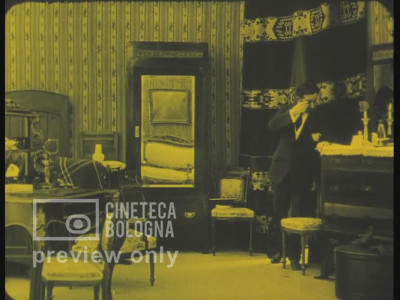
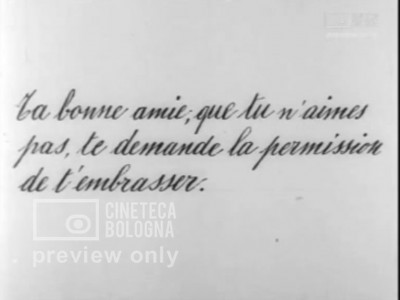
This film is also known by the title "L’ipocrita smascherato". In respect to other FAI films, it contains quite an innovative scene, in which the loan shark is on a train, looking out the wind...
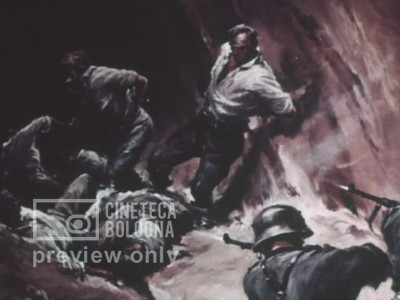
On the 150th anniversary of the Carabinieri Service, this documentary commemorates the service’s history, founded on the motto “For Centuries Faithful”. A celebration of Carabinieri histor...
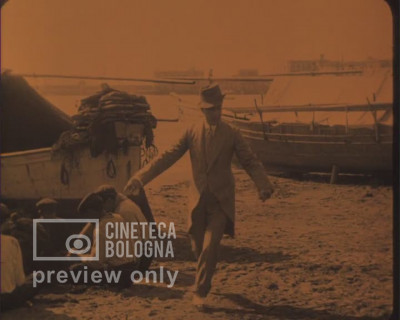
Si tratta di un frammento di una breve commedia di ambientazione napoletana, in cui l'attore Vincenzo Scarpetta, figlio del commediografo Eduardo, è alle prese con una Miss d'oltre Atlantico, l...
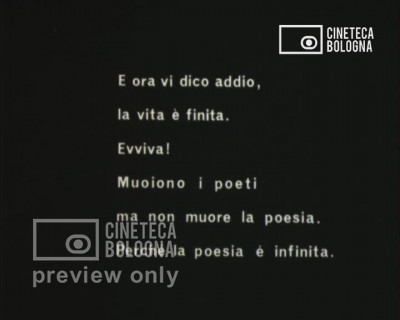
The past recaptured by Aldo Palazzeschi. The moody and sardonic spirit of his early youth, ironic comments about experiences with "crepuscolarism" and "futurism". His poetry carefully captures w...
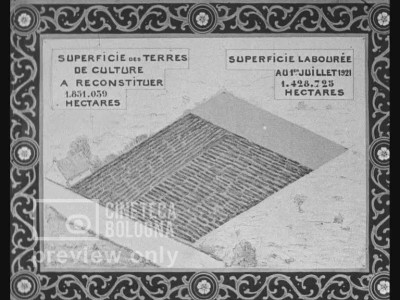
Inizia con una scena di aratura con buoi, seguita da una didascalia che loda i coraggiosi mutilati francesi che contribuiscono alla rinascita del suolo valorosamente difeso durante la prima guer...
The documentary makes use of different testimonies of Art Nouveau, from a brief, initial summary of the artistic movement, to an interview with a person (Sergio Tofano) who lived during that era...
Film restored in collaboration with CNC - Service des Archives du Film.
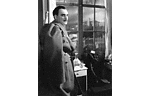
Medium shot of Rjepkin (actor: Vladimír Borský) standing next to a night stand in a hospital room. In the background is a window with a panoramic view of Brno.
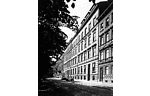
Wide shot of an empty city street with three-storeyed buildings on the right and urban greenery on the left.
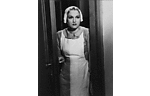
Medium shot of Nurse Mathilde (actress: Adina Mandlová) standing in a half opened door with her hand on the door handle.
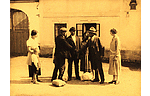
Three families on the villiage green after the mobilization. From the left Mrs. Bártová and her son, Bárta (laborer), Janda (smith) and Tomeš (farmer) pledge a loyalty to the idea of Slavonic unit...
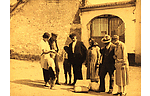
Three families on the public green after mobilization. From the left: Mrs. Bártová, Bárta and his son, Janda and his family, Tomeš and his family. Travel packages in the foreground.
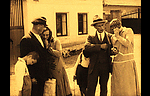
After the mobilization: women hold on men and cry. On the left Janda (smith), the second one is Tomeš (farmer).
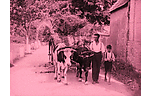
Farmer Tomeš and his son Jeníček with the oxcart full of straw.
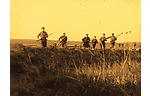
The battle of Zborov: A group of soldiers during the assault.
Universum Filmverleih, Söhne des Volkes, Der Kinematograph, 620, (1918), S. 3. "Der bisher unter dem Titel 'König des Lichts' angekündigte Film...der neue Film für die neue Zeit"
Theodor Zimmermann, Zur Lage in der Zensurfrage, Der Kinematograph, 624, (1918). Bericht, dass das Innenministerium befohlen habe, alle Zensurverordnungen unverzüglich aufzuheben. Lediglich Verordnun...
Fort mit den letzten Überresten polizeilicher Gewalten, Die Filmwelt, 12.Jg., 49, (1918). Aufruf, dass nach Wegfall der Zensur auch alle anderen polizeilichen Verordnungen wie Werbeverbote oder das k...
Zensurwirrwarr !, Die Filmwelt, 12.Jg., 50, (1918), S. 12-20. Obwohl die Zensur durch Reichsgesetzgebung aufgehoben sei, würde die Zensur in Württemberg und Bayern weiterbestehen, in Berlin würden ...
National-Film-A.G., Freiheit, Gleichheit, Brüderlichkeit !, Lichtbildbühne, 45, (1918).
Neutral Film, Die Welt ohne Hunger, Lichtbildbühne, 48, (1918), S. 3.
Universum Filmverleih, Der ewige Frieden Pax Aeterna, Lichtbildbühne, 48, (1918), S. 68
Arthur Loening, Ein Friedensfilm, Lichtbildbühne, 50, (1918), S. 40 & 56. Der Film greife die aktuelle Sehnsucht nach Frieden auf. Wie aber der Westfälische Frieden einen Machtzuwachs für Frankreic...