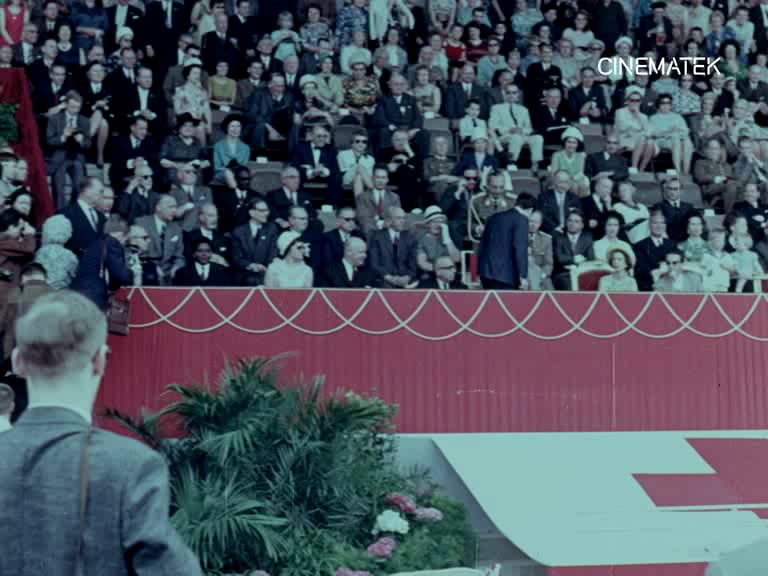
Celebration of the centenary of the Belgian Red Cross.
The musical legacy of Queen Elisabeth of Belgium: the genesis of the annual Queen Elisabeth Music Competition.
The musical legacy of Queen Elisabeth of Belgium: the genesis of the annual Queen E...
1 - 28 giugno 1914:
2 - nella piazza di una città dell'Austria delle bambine vestite di bianco si esibiscono in un saggio di danza per celebrare la chiusura dell'anno scolastico
3 - la ...
The film dedicated to Czechoslovak legionnaires in the First World War begins with symbolic shots illustrating the outbreak of the war conflict - title Sarajevo, animated map of Europe afire and a det...
I. 9.2-inch coastal gun is reloaded.II. Medium shot of HMS Walker (G.08) steaming at speed in a slight sea. Medium close-up of a sailor of HMS Woolston, playing with a kitten.III. Long shot views of s...
The 'big battle' structure of the film opens with the preparatory bombardment for the days before the attack, the Infantry marching to their final positions, the attack itself, the casualties, prisone...
The King and Queen arrive in Calais to start the visit. The King inspects war trophies at Bailleul with General Sir Herbert Plumer, then goes on to watch a tank demonstration and talk with a group of ...
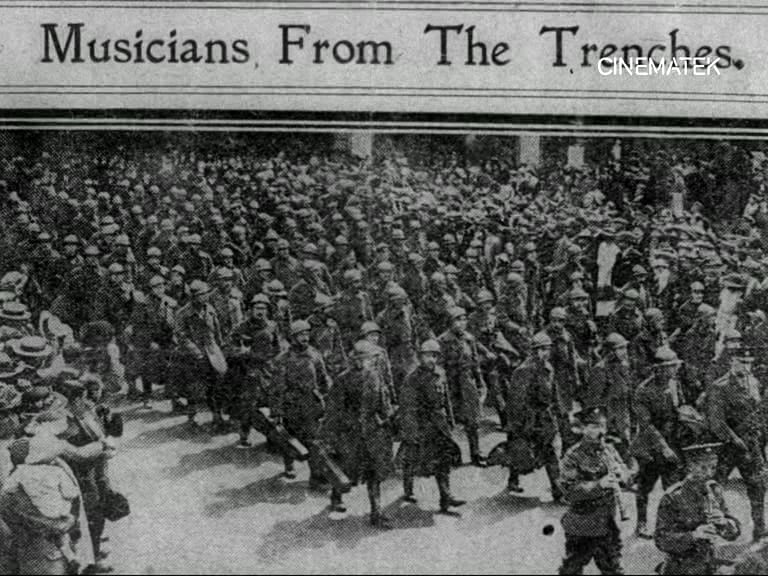
A column of men from 1st Balloon Company, in the Meuse or Moselle region, march through a village. British "8-inch Naval rifles" (in fact 6-inch Mk VII guns) being fired by gunners of 27th (New York) ...
Film poster
Film poster
Luis Trenker
Lissy Arna, Luis Trenker
Luis Trenker
Still from "Heimkehr"
Dita Parlo, Lars Hanson
Joe May (second from the left), Gustav Fröhlich (third from the left) on the set
Oscar Geller, Detektiv-Filme, Der Kinematograph, 593, (1918), S. 21-25. Eröterung der Krimiwelle. Man könne Krimis nicht einfach als Schund abtun. Auch wenn viele der frühen Krimis, maßgeblich aus...
Poldi Schmidl, Der Kinobesitzer als Staatsbeamter, Der Kinematograph, 607, (1918). Angesichts der geplanten Konzessionspflicht für Kinobesitzer wird die Möglichkeit einer Verstaatlichung der Filmind...
Argus, Neuheiten auf dem Berliner Filmmarkte, Der Kinematograph, 614, (1918). "Kinder der Liebe" als Tendenz- und Aufklärungsfilm bezeichnet, dessen Absicht überzeuge. "Der Gefangene von Dahomey" se...
Egon Jacobsohn, Ferdinand Lassalle, Der Kinematograph, 615, (1918), S. 18-30. Bericht von der Uraufführung in Berlin. Die Aufführung sei ein voller Erfolg gewesen, zumal es besonders gut in die Zeit...
Deutsche Lichtbild Gesellschaft e.V., Der Friedensreiter, Der Kinematograph, 618, (1918), S.22-23.
Emil Perlmann, Wenn die Waffen ruhen...!, Der Kinematograph, 619, (1918). Erörterung der Lage der Filmindustrie angesichts des greifbaren Kriegsendes. Die Filmindustrie müsse den Kampf gegen die Zen...
Der deutsche Film für das Ausland, Der Kinematograph, 620, (1918). Es sei Aufgabe der deutschen Filmindustrie, den negativen Vorstellungen über Deutschland, die im Ausland im Krieg verbreitet worden...
Universum Filmverleih, Die Waffen nieder, Der Kinematograph, 620, (1918), S. 28-33.